A Critical Reflection:
Education Serve Democracy?
Several comic strips are used from Bill Watterson to help identify specific learning objectives and insights received from this course.
Bill Watterson, American cartoonist wrote and illustrated a popular daily comic strip for over ten-years. Watterson uses a pair of characters, Calvin and Hobbes. Calvin is a venturous and mischievous six-year-old boy, epithet of John Calvin who was a 16th-century French Reformation theologian. Hobbes, Calvin’s stuffed tiger, epithet of Thomas Hobbes a 17th-century English political philosopher. From Calvin’s perspective Hobbes is his anthropomorphic sidekick. Though the series does not specifically address current political individuals or events, it does explore an assortment of issues such as family life, philosophical dilemma, public education, environmentalism, and deficiencies in opinion polls.
The point of this investigation was to gain a better understanding of the role an educator plays within a democracy. Specifically, looking at Far East Supervisory Union (FESU) board and their connection with special education; additionally it provided me with a real-world application of professionalism, methodology, and pedagogy as a function in a larger system of webbing. Prior to this investigation, I did not have much knowledge of school boards or their function within the community. Through research I have been led to the belief that school boards are a vital link in strengthening community based resources, and provide benefits that reach beyond district lines.

Unlike parenting, a school board is composed of a locally elected body, from within a school district’s community. School boards act as a link in the political system between communities/districts and state/nation. Vermont board members act as trustees to the community, by providing accountability for public education, assuring: (a) high standards of education for all students, (b) the community receives a return for their investment, and (c) ensure the system is operating ethically and efficiently. Boards are not administrators, they are elected officials who set educational framework and observe what is happening. They create support systems for education amidst the community, and hold districts accountable for their effectiveness.

In my opinion many of the debated topics in the school board are passed over by a large portion of the voting populous. This may occur for a variety of reasons, including: a lack of political interest, lack of knowledge around public education, and poor communication between boards and the community. The unique position of the district boards is that elected officials work for the district, and decide where to allocate resources, which are provided by the tax payers. If there is a concern regarding education in the legislature (i.e. the consolidation of supervisory unions into larger districts), district boards provide a useful tool to channel resources for collective bargaining at a state level.

Learning should be a voluntary act, and teaching should be the teacher’s response to the students’ desire of learning. One of the most important important characteristics of this class and course work has been, learning how to create curriculum that is not only academically rigorous but also developmentally appropriate.

Education reform has taken place since the advent of the common school, with members of the community making decisions on what the practices are for educating their children. As discussed by Ravitch (2013), the development of recent legislation such as No Child Left Behind (NCLB) and Race To The Top, education reform has not only become a hot topic in the legislature but has also attracted the attention of the largest corporations in America.
The National Educators Association (NEA) (2014), found that students with parents involved in their education earn higher grades and test scores, attend school routinely, have better social skills and improved behavior, and are more likely to graduate and go on to secondary education regardless of family income or background. Further, they asserted that students are able to reach greater levels of attainment when schools engage families in ways that improve learning with support from the parents.
in ways that improve learning with support from the parents.
Advocacy is the support in favor for a particular cause, advocates can work together collectively to address a common goal. Schools, families, and communities need to work together if we are going to meet the educational requirements of todays students. I had the opportunity to observe Mrs. Smith from Centerville Education Center, working with team members to develop relationships through a variety of support channels with her students’ learning and welfare as a collective goal.

Research points to the crucial role that schools play in the level of parental involvement. Explicitly, schools boards have the ability to delineate their expectations of parents and frequently be in contact with parents regarding the content their child is learning. School boards can increase parent involvement by creating family nights, well organized parent-teacher conferences, and encourage parents to act in partnership in making school decisions. As an educator it is my responsibility to collaborate with other professionals to encourage the participation of the family and the community in cooperation to foster student learning (as cited by the NEA, 2014).
Urie Bronfenbrenner (1994), took this a step further combining ecology with a humanistic look at relationships that exist between people and their environment; furthering his research on child development through this lens; children are exposed to, and influenced by, multiple variables. These variables not only include the influence of a child’s schooling, but also combine the influence of the child’s surroundings, parents, friends, socio-economical status, etc. that shape both the cognitive and physical development of a child. Keeping the humanistic approach to ecology in mind acts as a function to enhance the educational health of learners by encouraging fairness and equity for all students including all members of the educational community.

Teachers are being assessed from the grades students receive on standardized tests, some teachers are loosing their jobs over low test scores while others receive a raise in salary for high test scores. Over the past decade private organizations have been the ones who have been advocating for students in the legislature, while at the same time promoting their own for-profit interests. Though the purpose of these organizations may appear to address the needs of education, their alliance is with the investors and to increase profits. This is done by decreasing human interaction and increasing the use of technology used in the classroom. Ultimately, this undermines the purpose of a community based school system. In the end, investors are the only ones who benefit from this; they remove power from the local community and place it in the hands of lobbyists, leaving Washington todecide the fate of education reform.
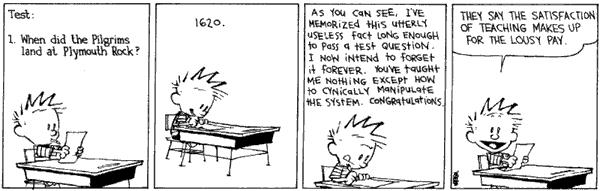
The purpose of this investigation was to gain a better understanding of the role an educator plays within a democracy. Specifically, looking systemic connections related to public education. As an educator it is my responsibility to advocate students’ best interests, to collaborate with other professionals, to encourage the participation of the family, and the community together in cooperation to foster student learning.
References
Bronfenbrenner, U. (1994). Ecological models of human development. In International Encyclopedia of Education, Vol. 3, 2nd. Ed. Oxford: Elsevier. Reprinted in: Gauvain, M. & Cole, M. (Eds.), Readings on the development of children, 2nd. (1993, pp.37-43). NY: Freeman.
National Education Association. (n.d.). NEA reviews of the research on best practices in education. Class documents
Ravitch, D. (2013). Reign of error: The hoax of the privatization movement and the danger to America’s public schools. NY. Knopf. ISBN-10: 0385350880. ISBN-13: 978-0385350884
Watterson, B. (1996). The Calvin and Hobbes tenth anniversary book (3rd ed.). Kansas City: Universal Press Syndicate Company

No comments:
Post a Comment